How Trump Didn’t Break the Rules-Based Order—He Dropped the Mask, and Power Forgot to Pretend
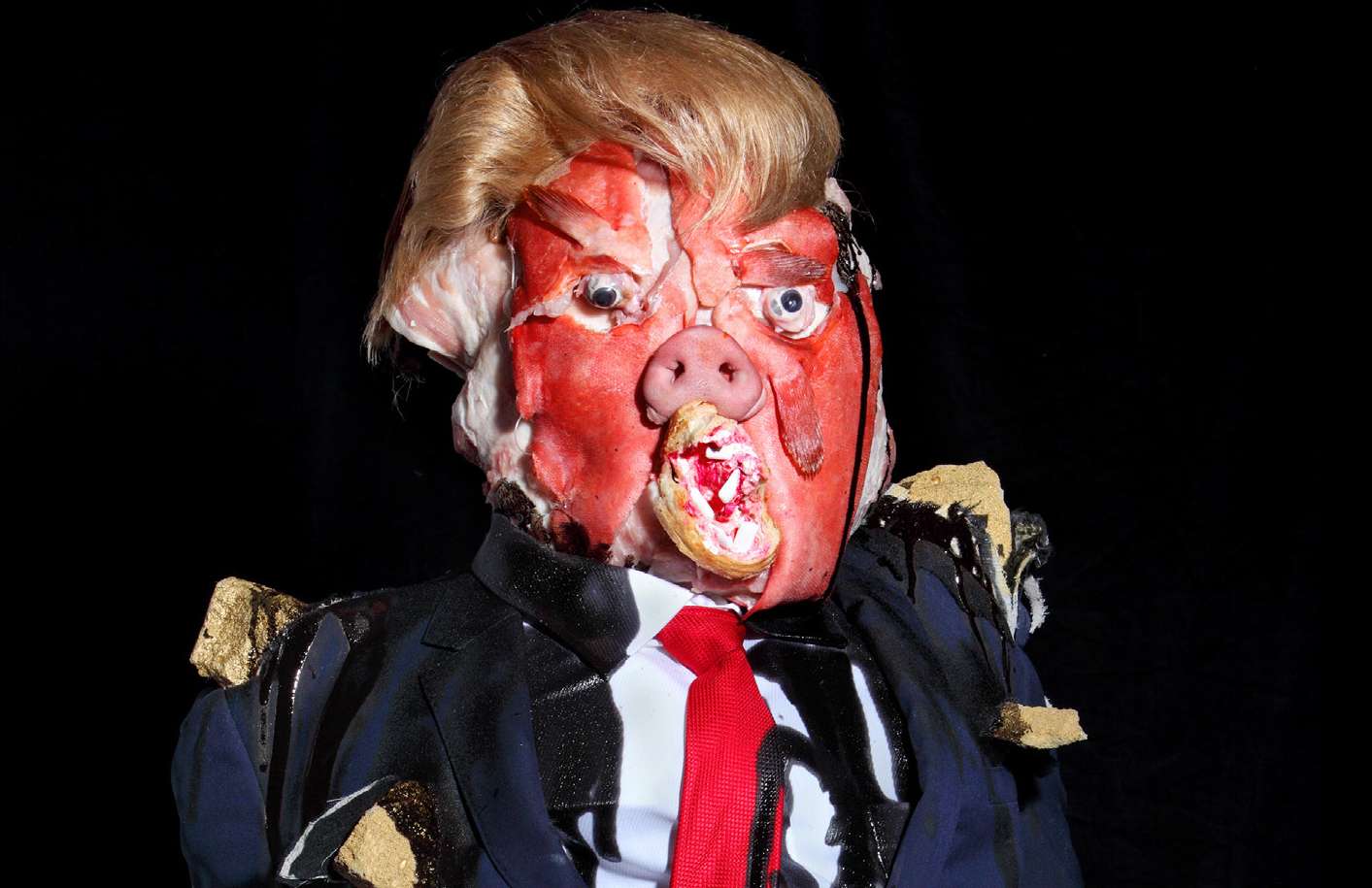
Art and Photo: James Ostrer (displayed at Hong Kong Art Central, 2016)
Trump’s vulgar display of power is dangerous. But its danger does not lie primarily in its novelty. What is new is not the reckless ambition, but the abandonment of etiquette itself — the stripping away of procedural language, moral pretense, and institutional decorum that once softened, obscured, or laundered similar exercises of power. What feels like rupture is better understood as disclosure.
For roughly three decades after the collapse of the Soviet Union, the United States and its allies enjoyed what can only be called a triumphalist sugar rush. History, we were told, had rendered its verdict. Liberal capitalism had not merely prevailed; it had proven itself the final form of human organization. This was less a sober assessment than a mood — self-congratulatory, impatient with dissent, and deeply incurious about alternatives. Victory metastasized into doctrine, and doctrine hardened into dogma.
That dogma quickly acquired a name: the Washington Consensus. Privatization, deregulation, trade liberalization, capital mobility, fiscal discipline—these were presented not as ideological commitments but as neutral, technocratic necessities. They were not debated so much as administered. International inrstitutions ceased to be forums for plural negotiation and became enforcement mechanisms. “Reform” came with conditions — conditionalities, in the bloodless jargon of the IMF; sovereignty was honored rhetorically while being hollowed out in practice.
At some point—quietly, almost without announcement—neoliberal globalization was conflated with “the rules” in the so-calledrules-based international order.” Investor protections, creditor rights, intellectual property regimes, and cross-border capital flows were elevated from policy choices to moral imperatives. To deviate was not merely inefficient but irresponsible, even illegitimate. The rules-based international order stopped being primarily about peace or mutual restraint among states and became about stabilizing a global financial architecture that increasingly answered to no electorate at all.
This is where the legitimacy problem began to compound. Rules that bind only the weak are not rules; they are instruments. The illegal invasion of Iraq was reframed as enforcement. Structural adjustment programs imposed on developing nations shredded social fabrics and were artfully described as modernization. Sanctions regimes that immiserated civilian populations were marketed as humane alternatives to war. Over time, the gap between rhetoric and reality became impossible to ignore. Outside the West, this was obvious early. Inside the West, it took longer—but the corrosion was real.
Empire, after all, is not just an external posture; it is a domestic transformation. A republic that commits itself to permanent global power projection cannot govern itself the way it once did. Decisions must be made quickly, secretly, and by specialists. A permanent security apparatus becomes unavoidable. Intelligence agencies, classified budgets, deniable operations, and emergency powers cease to be exceptional and become routine. This is not conspiracy; it is institutional adaptation under conditions of permanent emergency. Secrecy normalizes itself. Oversight becomes performative. Interests congeal.
Empire also requires elites capable of coordinating beyond national borders. Finance comes first. Global capital demands legal harmonization, insulation from electoral volatility, and dispute resolution mechanisms safely removed from mass politics. Cultural and professional elites follow—think tanks, media ecosystems, academic disciplines—normalizing the assumptions that keep the machinery running. Democracy becomes local; power becomes global.
Under these conditions, nationalism is not some inexplicable moral regression. It is a predictable reaction. When decisions that shape ordinary lives are made elsewhere, in a language of inevitability, resentment will find a vocabulary. Nationalism promises to relocalize sovereignty, to restore intelligibility, to name someone—anyone—who can be held responsible. That this reaction often curdles into exclusion or authoritarianism is tragic, but not mysterious. When democratic channels become hollowed out, symbolic politics rush in to fill the void. When democratic voices of dissent are rendered silent, the vulgarian nationalist clang becomes clarion.
Thus enters Trump — not as an aberration, but as a grotesque repetition of a long-set logic. Trumpism is not anti-imperial; it is anti-managerial. It rejects elite mediation, not domination. It despises international institutions, not coercive power. What it offers is empire without euphemism, power without apology, interest without universalist costume. Where the post–Cold War order said, “This will be good for everyone, eventually,” Trump says, “This is good for us now—don’t insult me by pretending otherwise.”
Greenland, tariffs, threats, transactional alliances—these are not policy proposals so much as signals. They announce the end of what even the Canadian Prime Minister calls “the pleasant fiction.” Trump discards the universalist rhetoric, but the logic beneath it remains. Trump’s vulgarity feels shocking because it abandons the language that once allowed citizens to imagine that power was constrained by law rather than merely prancing around international forums costumed as such.
The uncomfortable truth is this: a republic that governs an empire must either hollow out democracy to preserve empire or abandon empire to preserve democracy. For decades, we tried to evade that choice through proceduralism, technocracy, and moralized markets. Trump did not create the contradiction. He simply stopped pretending it wasn’t there.
What we are living through is not the birth of something wholly new, but the moment when the old order loses the ability to lie convincingly about itself. The danger is real. But so, perhaps, is the opportunity, if we can bear to look without nostalgia—to finally argue, again, about first principles rather than comforting myths.
 Back to the Root
Don’t just think it, SAY IT. HERE!