
Shouldn’t the current execution crisis and Utah’s decision to return to the firing squad give rise to some sort of attempt at a final reckoning of our nation’s continued commitment to capital punishment?
I mean, I know that all the arguments and debaters’ points have long since worn deep grooves in the flooring of public discourse from our endless circling of the all-too-familiar core moral and practical considerations; round and round we’ve gone. Like partner’s trapped in a miserable marriage’s inescapable theme, we loath the sound of even our own voices bleating the litany of claims, comparative cases, metaphors, aporias, and counterfactual conditionals, but cannot get beyond it—to the point of exhaustion.
So maybe this is why no one seems inclined to re-raise the fundamental question: Why are we still doing this?
Having long since reduced possible rationales for state death sentencing to just the inevitable two, deterrence and retributive justice, can anyone tell me why—no matter which rationale we stake state murder’s legitimacy upon—why the fuck we’ve gotten ourselves so stupidly twisted about the method of the deed?
Either argument would seem to justify utter indifference to the suffering of the condemned.
And yet, from the gallows pole to the firing squad to the electric chair to the gas chamber to lethal injection, we have continuously reinvented the technology of state murder in search of ever more “humane” methods for executing the condemned. And with each iteration of this bizarre search for tidy, bureaucratically sanitized executions, we discover that the consequences of small lapses beget ever more gruesome results: heads removed by the gallows noose, men slowly bleeding to agonized death from wounds inflicted by the poor marksmanship of firing squads, limbs and heads set afire by the questionable, monster-movie machinery of the electric chair, men moaning and deliberately bashing their own heads against any available hard surfaces in their efforts to hasten the death that gas would not bring fast enough, and finally, the decades-long string of torturous lethal injections—only the two most recent of which have received significant attention by the national media.
The real question, however, is not when and whether we will ever find a humane means of execution; it is really, Why do we try?
If the rationale is retributive justice, since capital murder usually involves little sympathy for the victim by the perpetrator, retribution would seem to warrant similar lack of sympathy for executing the heartless killer.
Want retribution? Stuff a sock in the condemned’s throat and let that fucker suffocate. Justice done.
If the rationale is deterrence, then suffering of the condemned would seem a salutary, if not essential, feature of the sentence.
Want deterrence? Stuff a sock in the condemned’s throat and let that fucker suffocate—on live television! Wrong-doers warned.
What’s the matter? Too morbid? Too cruel? Too uncivilized? For godsake, we already know that execution protocols have been tailored to ease the suffering, not of the condemned, but of the witnesses and the public on whose behalf the witnesses serve. Indeed, the firing squad protocols are designed to ease the suffering of the executioners; one of the rifles used by the squad is loaded with blanks in order to allow each squad member the opportunity to salve the conscience with the possibility that it was the others who fired the killing rounds. Lovely.
These executions are done in our name. It does not matter that you are a supporter of capital punishment and I am not. Nor are our children blameless; It is for their ultimate benefit—collective moral correction or public safety– that we carry out these sentences under due process of law. We are all in this together. We are all culpable or we are all to be congratulated for our high-minded efforts to achieve humane horror.
 If we’re going to continue our committed exceptionalism on the matter of state murder–If the blood-thirsty among us are unwilling to finally stand the fuck down and we cannot muster the collective will to end it, then I say let’s do this fucking thing for real.
Fuck the disappearance of the proper chemical cocktail for “painless” execution. Bring back the Halifax gibbet. The Scottish Maiden. The Italian Mannaia. Sweet Louisette of Paris, the Hungry Widow of the First Republic, le Rasoir National, Madame Guillotine. Bring the family, pack a lunch, make a day of it!
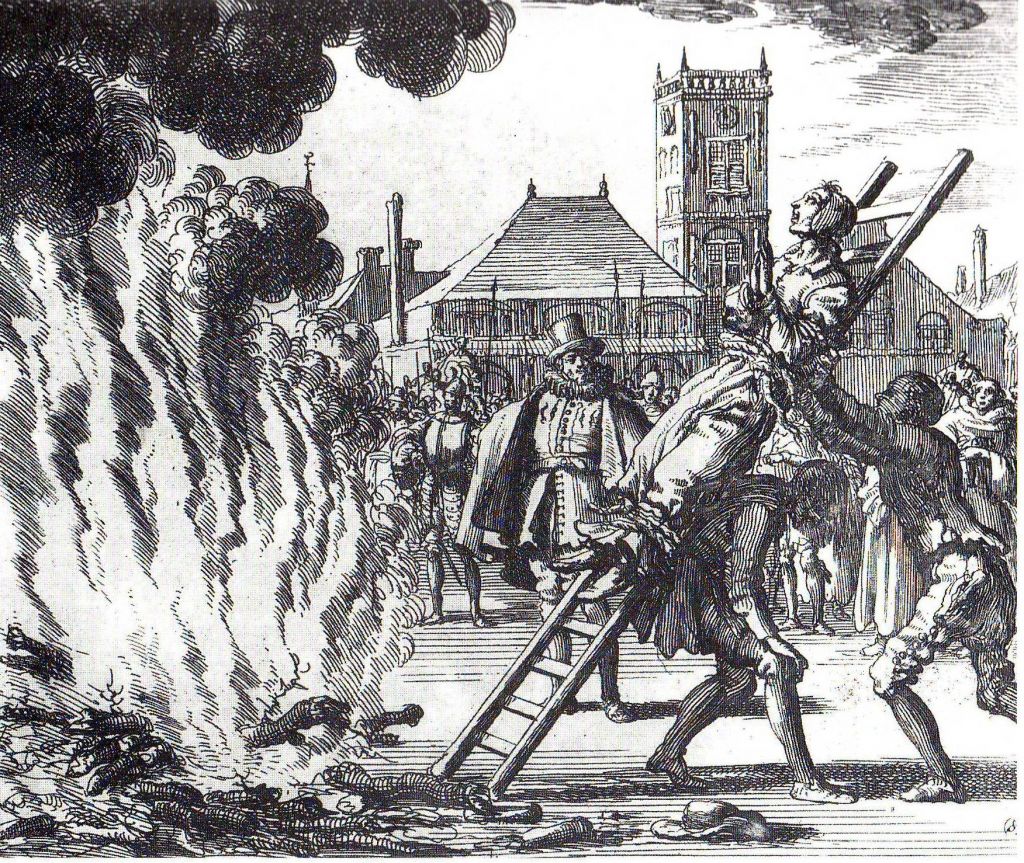 Let’s be proud of who we are and what we do. No more hiding executions behind literal and figurative walls of secrecy and shame. Bring back the 16th century’s deliberate and elaborate spectacularization of public executions.
Be an American! Encourage your public schools to use the occasion and opportunity of your next local Execution for a 6th grade civics class field trip!



 Back to the Root
2 responses to “Just Killing Time”
yesterday in Alabama they freed a man who had spent 28 years on death row for a crime he could not possibly have committed. makes you wonder how many others have already been killed and no one will ever know of their innocence. shameful and barbaric…
LikeLiked by 1 person
and I hope I didn’t leave the impression that I think people should be killed for crimes they DID commit. it’s beyond me how killing people teaches that killing is wrong.
LikeLike